Foreword
On March 14th, 2014, 34 people met in Esch/Belval, Luxembourg, to spend a few days playing games. Nobody gave a keynote and nobody sold anything. There was no agenda either: the participants built it themselves every morning.
Twelve years later that small experiment has turned into a community with 93 events in 40 cities and 20 countries, from Luxembourg to Sydney and from Mexico to Mumbai, hosted by volunteers who first came as players and then wanted the same thing in their own city.
This book tells how that happened. It has four parts:
- How it started covers the meeting, the name, the logo and the first event in Luxembourg.
- How we grew follows the chain of encounters that took #play14 from Luxembourg to 39 other cities. Every city has its own chapter, and the people who brought #play14 there are invited to tell that story in their own words.
- The mentoring program explains how we grew without a head office, a marketing budget or a franchise model: experienced hosts help new ones.
- What makes #play14 special uses the fourteen words from the talk I gave at GamiCon 38 in March 2026 to describe what you find at a #play14 event.
I’m one of the co-founders, so this is an insider’s account, and an incomplete one. Most of the story happened in rooms I wasn’t in, with people I met later or have still not met. If you were there and remember it differently, the book is open source: every page has an edit link, and corrections are welcome.
Why write it down
People always ask us the same questions. How did it start? How does it work without anyone in charge? What makes it different? Over the years I’ve told the story at dinner tables, in marketplaces and on stage, and every retelling loses a little. This book is my attempt to write it down once, so the next generation of hosts and mentors knows where the community comes from and why it works the way it does.
It’s also a book about building a community, and I didn’t learn that on my own. I want to thank the other communities I belong to, and two people in particular. Alberto Brandolini was a player at the very first #play14, and he has built a remarkable community around EventStorming. Mike Rohde leads the sketchnoting community. Both showed me that a community grows around a generous idea and the people who share it, not around an organization. Their example runs through these pages.
A meeting in a hotel bar
December 2013
The story starts with an event we couldn’t attend.
play4agile was a German unconference about games and agile, and in 2013 it was the place to be if you cared about learning through play. Tickets for the next edition sold out within a few hours, and three of us in Luxembourg didn’t get one: Yann Gensollen, Pierre Neis and me, Cédric Pontet.
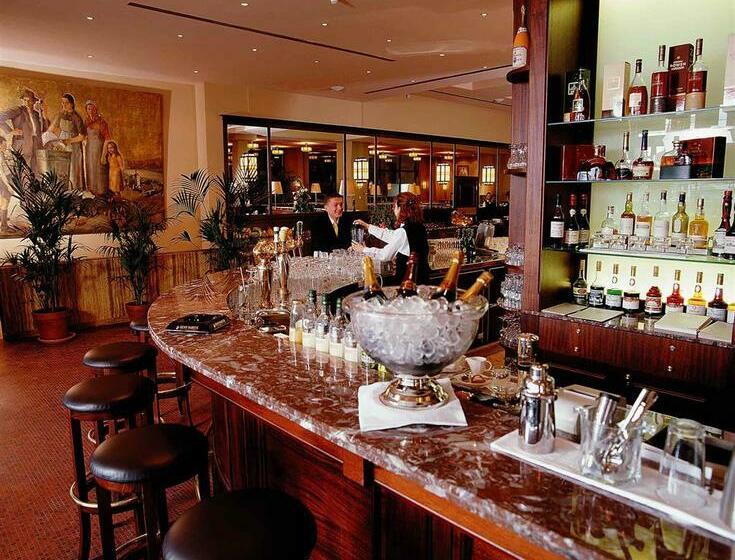
We met at the bar of the Alpha Mercure hotel to talk it over, and the conversation soon turned to a different question: why not organize a playful event of our own?
It turned out we didn’t need much: a venue, a date and a good name. We picked the date that night: March 14th, 2014.
The name took longer, and we came up with it together. Our first idea was just the number, but we couldn’t register a domain name like “14.org”. So we put “play” in front of it, which said what the event was about anyway. Then we added the hashtag, so nobody would ever have to ask “what’s the hashtag?”. And yes, the hashtag is part of the name.
People still ask us why 14. The official answer is: why not?
A name and a logo
January 2014
Having a name was a good start, but we needed a logo before we could promote the event. I asked a co-worker, Christian Jolas, and he generously gave his own time to sketch several proposals.
After some hesitation we went for the simplest and most colorful one, and we have never regretted it. We first saw it printed on black t-shirts, and we knew right away it was the right choice. Looking at the photos after the first event, we realized Christian had given us more than a logo: he had given us a visual identity.
The five colors (red, orange, yellow, green and blue) have been with us ever since. They are on the website, the t-shirts and the badges, and you’ll find them in the theme of this book too.
The brand is the subject of its own chapter later on: see Brand.
March 14th, 2014
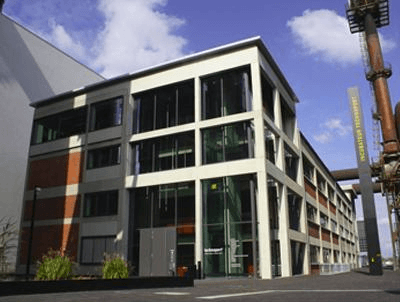
After only three months of preparation, the first #play14 welcomed 34 players in Esch/Belval, Luxembourg.
We got the venue for free thanks to Diego De Biasio, then CEO of the Technoport. Diego also helped with the logistics, which mattered a lot for three first-time organizers. We couldn’t have done it without him, and that is why we still count Diego as a founding member of #play14, the fourth name next to Yann, Pierre and mine.
The afternoon nobody planned
From the very first edition, #play14 was an unconference. We had a venue, food and a marketplace, but no program. The participants created the agenda each morning.
My favorite memory from that weekend is the last afternoon. Many people had flights to catch, and only a small group was left. Instead of continuing with the marketplace, we spent the whole afternoon doing improv theater. It was one of the funniest afternoons I’ve ever had, and it was great precisely because nobody had planned it.
That afternoon taught us something we still believe: the event belongs to the people who are in the room. We come back to that in the chapter called Open.
Among the players that weekend was Alberto Brandolini, who has since built a worldwide community around EventStorming. Having someone like him in the room, playing and learning alongside everyone else, set the tone from the start: at #play14 there are no experts on stage. More on that in Flat.
Once was not enough
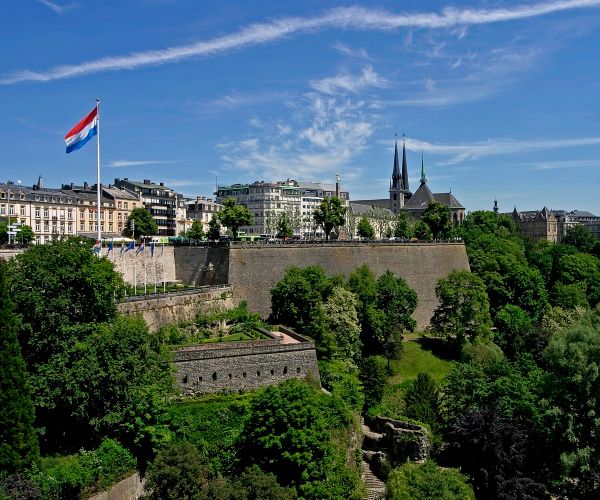
March 27th, 2015
We were so happy with the first event that we announced the second one before the first had ended. We asked Diego whether we could book a date for the following year, and he said yes.
A lot of players from 2014 came back for the second edition, which told us we were onto something. People weren’t there for a one-off novelty. They wanted to come back and play again with the same group.
That edition also brought two new faces from London: Chris Caswell and Christina Ohanian. We didn’t know it then, but meeting them changed the direction of #play14.
A chain of encounters
#play14 never had a growth plan. It grew one person at a time.
In Luxembourg in 2015, I met Chris and Christina, who organized in London afterwards. In London, I met Karsten, who organized in Hamburg. In Hamburg, I met Mari Luz, who organized in Madrid. In Madrid, I met Hanna, who organized in Sydney. In Sydney, I met Fred, who organized in Kuala Lumpur. In Kuala Lumpur, I met Darwin, who organized in the Philippines.
That is one branch. There are many others, and this part of the book follows all of them back to where they started.
Wider, not bigger
At first we never imagined #play14 would spread to other cities. Our plan was to make the Luxembourg event bigger every year. London changed that. Instead of one big event, #play14 would get wider: more cities, each with its own local team, all sharing the same spirit.
That decision shaped everything after it:
- Each event stays small enough that everyone gets to know each other.
- New events start because someone wants to host one, not because we went looking for a market.
- Almost every new city starts with someone who played at another city first.
- The people who already know the format help the next team. That later became the mentoring program.
The family tree
Every city below grew out of the one above it: its first organizers had played there before bringing #play14 home. Many cities have more than one parent, and the chapters tell the full story. This tree follows the main line.
- Luxembourg (2014)
The lineage comes from the event and player records on play14.org: who hosted each first edition, and which events they had attended before. Those records are incomplete for the early years. If you know a branch better, tell us.
How these chapters work
Each city chapter has two halves.
Where it came from is my part. It traces the city back to where its first organizers played #play14 and, often, where I met them.
In their words belongs to the people who brought #play14 to that city. I’ve asked each founding team to tell their own story: how they discovered #play14, why they decided to bring it home, and what happened at their first edition. Their chapters will fill in one by one.
The first circle, 2015–2016
For its first year, #play14 was a Luxembourg event. Then people started coming to Luxembourg from elsewhere, and leaving with the idea of doing it at home.
The first four cities all trace back directly to Luxembourg, or to the people we met there. In 2015, Chris Caswell and Christina Ohanian took it to London, and Pierre Hervouet to Beirut. In 2016, Giovanni Puliti took it to Milano, and Julian Kea and Karsten Mueller to Hamburg.
London
Where it came from
In March 2015, at the second Luxembourg edition, I met Chris Caswell and Christina Ohanian, who had come over from London.
At first we never imagined #play14 would spread to other cities. Our plan was to make the Luxembourg event bigger every year. But Chris and Christina wanted the same thing at home, and it became clear that with their motivation and our help they could take the format to the UK: the same experience for participants, with a slightly different British flavor.
It worked. “The two Chrises”, with Chris Selby and Mark Webb, recreated what they had experienced in Luxembourg, and the players in London enjoyed it just as much. That is when #play14 started to grow wider instead of bigger.
London went on to welcome players who started their own cities: Karsten Mueller in 2015, who started Hamburg, and Ulises Aguila in 2018, who started Mexico.
In their words
This space is waiting for the story of the people who brought #play14 to London: Chris, Chris, Christina and Mark. How did you discover #play14? What made you decide to bring it home, and what happened at that first edition? See Tell your story.
Beirut
Where it came from
Pierre Hervouet played at the very first #play14, in Luxembourg in 2014, and he was a friend of the other Pierre, Pierre Neis. When he wanted to try running a #play14 in Beirut, we supported him, and Pierre Neis hosted it with him.
The Beirut edition lasted only one day, but people loved it all the same. Two months after London, #play14 had left Europe for the first time. That is when we began to see that learning through play wasn’t tied to one culture. The games, the debriefs and the unconference format worked in Lebanon just as they had in Luxembourg and London.
In their words
This space is waiting for the story of the people who brought #play14 to Beirut: Pierre and Pierre. How did you discover #play14? What made you decide to bring it home, and what happened at that first edition? See Tell your story.
Milano
Where it came from
Giovanni Puliti played at the very first #play14 in Luxembourg in 2014, and came back in 2015 and 2016. In May 2016 he brought it home to Milano with Fabio Ghislandi and Giulio Roggero.
The Milano team turned out to be one of the most prolific in the community. They went on to start Bari, Bologna, Figino Serenza and Florence. Milano also welcomed players who started cities of their own: Bernhard Sterchi, who started Basel, and Esther Balmaña and Francesc Mas, who started Barcelona.
In their words
This space is waiting for the story of the people who brought #play14 to Milano: Fabio, Giovanni and Giulio. How did you discover #play14? What made you decide to bring it home, and what happened at that first edition? See Tell your story.
Hamburg
Where it came from
In London, I met Karsten Mueller. Julian Kea had played in Luxembourg three years in a row, from the very first edition in 2014. Together they brought #play14 to Hamburg in June 2016, and I came along as their mentor.
Hamburg became one of the great crossroads of the community. In Hamburg I met Mari Luz Garcia, who started Madrid. Julian and Karsten went on to start Berlin. Barbara Pauer-Faulmann played in Hamburg in 2018 and started Vienna. Benjamin Sung Ho Wenzel played there in 2019 and started Munich with Karsten. And Hanna Karlsson came to Hamburg in 2018, a few weeks after Madrid, on her way to starting Sydney.
In their words
This space is waiting for the story of the people who brought #play14 to Hamburg: Julian and Karsten. How did you discover #play14? What made you decide to bring it home, and what happened at that first edition? See Tell your story.
Across Europe, 2017–2018
By 2017 the format had proven it could travel. Eight new cities joined in two years. More and more often, the new organizers hadn’t played in Luxembourg at all: they had discovered #play14 in Hamburg, Milano, Madrid or Barcelona.
That’s when the family tree started to branch. Hamburg led to Madrid and Berlin, Milano to Barcelona and Basel, and Madrid and Barcelona both fed into Porto. Eight events took place in 2017 and eleven in 2018.
So many new teams needed help that mentoring became a habit, and soon a rule. That story is told in the mentoring program.
Madrid
Where it came from
In Hamburg, I met Mari Luz Garcia. It was her first #play14. A year later, in June 2017, she brought it to Madrid with Beatriz Gortazar, Meryl His and Sophie Vurpillot, and I came as their mentor.
Madrid became a hub. Hanna Karlsson played there in 2018 and started Sydney. Manolo Lopez played in 2017 and started Barcelona. Raquel Pedrouso played in 2017 and joined the team that started Porto. Catalina Vrabie played in 2019 and started Iasi. Avi Liran played in 2019 and started Singapore. Tetiana Petrukha played in 2018 and joined the team that started Zürich.
In their words
This space is waiting for the story of the people who brought #play14 to Madrid: Beatriz, Mari Luz, Meryl and Sophie. How did you discover #play14? What made you decide to bring it home, and what happened at that first edition? See Tell your story.
Berlin
Where it came from
A year after Hamburg, Julian Kea and Karsten Mueller started a second German city, Berlin, in June 2017, this time with Cori Moore.
Berlin kept that chain going. Nicole Helmerich played there in 2023 and joined the team that started Zürich.
In their words
This space is waiting for the story of the people who brought #play14 to Berlin: Cori, Julian and Karsten. How did you discover #play14? What made you decide to bring it home, and what happened at that first edition? See Tell your story.
Timisoara
Where it came from
Dragos Marius Jumanca and Leon-Cosmin Lupu first played in Luxembourg in 2015, and they came back in 2016 and 2017. Adriana Rusu and Karina Herman joined them in Luxembourg in 2016. In July 2017 the four of them brought #play14 to Romania, and I came as their mentor.
Five years later, Romania got a second city: Iasi.
In their words
This space is waiting for the story of the people who brought #play14 to Timisoara: Adriana, Dragos, Karina and Leon-Cosmin. How did you discover #play14? What made you decide to bring it home, and what happened at that first edition? See Tell your story.
Barcelona
Where it came from
Barcelona came from two directions at once. Esther Balmaña and Francesc Mas played in Milano in May 2017, and Manolo Lopez played in Madrid a month later (Esther was there too). By October 2017 they had brought #play14 to Barcelona, with Mònica Valcárcel and Yuval Sidney Barak Azagury.
Barcelona then passed it on. Nuno Mateiro played his first #play14 there, and a year later he was part of the team that started Porto.
In their words
This space is waiting for the story of the people who brought #play14 to Barcelona: Esther, Francesc, Manolo, Mònica and Yuval. How did you discover #play14? What made you decide to bring it home, and what happened at that first edition? See Tell your story.
Amsterdam
Where it came from
Koen van der Pasch and Sonja Uittenboogaard first played in Luxembourg in March 2017. By November they had brought it to Amsterdam, with Anko Tijman, Jordann Gross, Ralph van Roosmalen and Stanislava Potupchik, one of the largest founding teams we had seen. I came as their mentor.
The Dutch team kept going for years. It started Utrecht, the first event after the pandemic, then Zoetermeer and Vinkeveen. Eddy Bruin and Theo Geelen, who played their first #play14 in Amsterdam in 2017, became part of it.
In their words
This space is waiting for the story of the people who brought #play14 to Amsterdam: Anko, Jordann, Koen, Ralph, Sonja and Stanislava. How did you discover #play14? What made you decide to bring it home, and what happened at that first edition? See Tell your story.
Basel
Where it came from
Bernhard Sterchi played in Milano in 2016 and in London in 2017. In April 2018 he brought #play14 to Switzerland with Andreas Erbe and Peter Stevens, in Basel.
Patrik Kämpf played in Basel that first year and went on to start Emmental. Bernhard later helped start Zürich.
In their words
This space is waiting for the story of the people who brought #play14 to Basel: Andreas, Bernhard and Peter. How did you discover #play14? What made you decide to bring it home, and what happened at that first edition? See Tell your story.
Porto
Where it came from
Porto is where three paths met. Ana Umbelino, Ricardo Fernandes and Rita Oliveira Pelica first played in Luxembourg in March 2018. Nuno Mateiro had played in Barcelona, and Raquel Pedrouso in Madrid. Six months later, in September 2018, they were hosting Porto together, and I came as their mentor.
The Portuguese team became one of the most prolific in the community: Lisbon, Viseu, Curia and Aveiro. Ricardo went further still. He mentored new teams in Kuala Lumpur, Bangalore and Delhi.
In their words
This space is waiting for the story of the people who brought #play14 to Porto: Ana, Nuno, Raquel, Ricardo and Rita. How did you discover #play14? What made you decide to bring it home, and what happened at that first edition? See Tell your story.
Bari
Where it came from
In December 2018, the Milano team of Fabio Ghislandi, Giovanni Puliti and Giulio Roggero took #play14 to the south of Italy, in Bari.
In their words
This space is waiting for the story of the people who brought #play14 to Bari: Fabio, Giovanni and Giulio. How did you discover #play14? What made you decide to bring it home, and what happened at that first edition? See Tell your story.
Three continents, 2019
For four years, #play14 grew mostly in Europe. In 2019 it reached three new continents within eight months: Sydney in March, Mexico in May and Kuala Lumpur in October.
Each time, it was through someone who had attended an event and wanted to bring it home. Hanna Karlsson played in Madrid and Hamburg, then hosted Sydney. Ulises Aguila played in London, then hosted Mexico. Fred Ducros played in Sydney, then hosted Kuala Lumpur. Nobody pitched #play14 to them.
Europe kept growing too, with Bologna, Lisbon, Vienna and Emmental. Sixteen events were planned for 2019 and 14 took place, the most we had ever had in a single year.
We had no idea how quickly it was about to stop.
Sydney
Where it came from
In Madrid, I met Hanna Karlsson. She was a Swede living in Australia, back in Europe for the summer of 2018 and looking for interesting conferences. She signed up for Madrid in early June and Hamburg at the end of June.
She was hooked right away and decided to bring #play14 to Sydney. With Catherine Hyams, Hayley Bell and Ralph Warta, she hosted the first event in Oceania in March 2019, and I came as their mentor.
In Sydney, I met Fred Ducros, who started Kuala Lumpur. Hanna came to Kuala Lumpur as his mentor.
In their words
This space is waiting for the story of the people who brought #play14 to Sydney: Catherine, Hanna, Hayley and Ralph. How did you discover #play14? What made you decide to bring it home, and what happened at that first edition? See Tell your story.
Mexico
Where it came from
Ulises Aguila played at #play14 London in 2018. The following year he decided to bring it to Mexico, the first event in the Americas. He put together a strong team with Adriana Molina, Alex Canizales Castro and Mario Méndez López, and Pierre Neis came as their mentor.
In their words
This space is waiting for the story of the people who brought #play14 to Mexico: Adriana, Alex, Mario and Ulises. How did you discover #play14? What made you decide to bring it home, and what happened at that first edition? See Tell your story.
Bologna
Where it came from
In June 2019, the Milano team started another Italian city, Bologna.
Marta Ghislandi played in Bologna in 2023, and joined the team for Figino Serenza and Florence.
In their words
This space is waiting for the story of the people who brought #play14 to Bologna: Fabio, Giovanni and Giulio. How did you discover #play14? What made you decide to bring it home, and what happened at that first edition? See Tell your story.
Lisbon
Where it came from
In June 2019, less than a year after their first edition, the Porto team started a second Portuguese city, Lisbon.
One of the players in Lisbon that year was Laxman Murugappan. He played again in Kuala Lumpur a few months later, and he went on to help start Manila and to mentor most of the Indian cities.
In their words
This space is waiting for the story of the people who brought #play14 to Lisbon: Ana, Nuno, Raquel, Ricardo and Rita. How did you discover #play14? What made you decide to bring it home, and what happened at that first edition? See Tell your story.
Vienna
Where it came from
Barbara Pauer-Faulmann played in Hamburg in 2018. A year later, in September 2019, she brought #play14 to Austria with Anton Jessner, Barbara Kühnelt, Michael Laussegger and Mike Leber, and Pierre Neis came as their mentor.
In their words
This space is waiting for the story of the people who brought #play14 to Vienna: Barbara, Anton, Barbara, Michael and Mike. How did you discover #play14? What made you decide to bring it home, and what happened at that first edition? See Tell your story.
Emmental
Where it came from
Patrik Kämpf played in Basel in 2018, its first year. In October 2019 he started a second Swiss event in Emmental, with Brigitte Woodtli and Elvira Bühlmann. Bernhard Sterchi, who had started Basel, and I came as mentors.
In their words
This space is waiting for the story of the people who brought #play14 to Emmental: Brigitte, Elvira and Patrik. How did you discover #play14? What made you decide to bring it home, and what happened at that first edition? See Tell your story.
Kuala Lumpur
Where it came from
In Sydney, I met Fred Ducros. He was French and lived and worked in Kuala Lumpur, and he decided it was time for #play14 in Asia. In October 2019 he hosted the first event in Asia with Andrew Lau, Narudee (Poom) Kristhanin, Shadaitul Intan and Sufiz Mohd Suffian. Hanna Karlsson, who had just started Sydney, and I came as mentors.
Kuala Lumpur became the seed for most of Asia. In Kuala Lumpur, I met Darwin Antipolo, who started Manila. Laxman Murugappan, Wan Fadzil Adlan Wan Sidik and Avi Liran played there in 2019 too. Four years later, in 2023, four players from India (Sripada Nema, Sumit Sethi, Senthil Kumar G and Atul Jain) came to Kuala Lumpur and went home to start Bangalore.
In their words
This space is waiting for the story of the people who brought #play14 to Kuala Lumpur: Andrew, Frederic, Poom, Shadaitul and Sufiz. How did you discover #play14? What made you decide to bring it home, and what happened at that first edition? See Tell your story.
The pandemic years
The first cancellation
February 2020
With a heavy heart, we canceled the 2020 Luxembourg event because of COVID-19. It turned out to be the right decision: the authorities imposed a lockdown on March 15th. It was the first of many cancellations.
An event built on being in the same room, playing with your hands and eating at the same table seemed impossible to run remotely.
The first online event

May 9th, 2020
After the initial panic, which everyone went through, we started looking for ways to recreate online what we did in real life. We wanted some normality back, and we didn’t want to lose our momentum.
The team that was supposed to host Stuttgart, with Pierre’s help, organized our first online event. Using Miro and Zoom, they brought together #play14 alumni and newcomers. We were all figuring out how to translate our games for a screen, and we learned a lot that day. I captured some of it in an article: the first online #play14 ever.
The big one
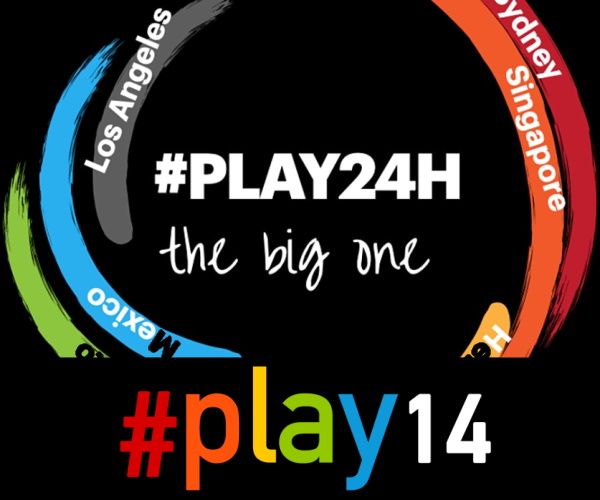
July 25th, 2020
By then we had hosting teams all over the world, and none of them could travel. Pierre suggested using that: a 24-hour online event that would follow the sun around the planet.
It started in Sydney at 9 AM local time and ended at 4 PM in Mexico and Los Angeles. Hosts in each time zone took turns facilitating.
Eighteen hosts shared the facilitation, more than any #play14 before or since.
It could only have happened because of the years before. By the summer of 2020, enough hosts existed on enough continents to keep a 24-hour event going.
The cost
The numbers tell how hard those years were. In 2019, 14 events took place. In 2020, 15 events were canceled, and only three took place. In 2021 only one did. Teams in Prague, Bangkok, Munich, Leeds, Stuttgart and Utrecht had everything ready and had to wait, some for years. A few of them never got their first edition.
Utrecht
Where it came from
The Dutch team from Amsterdam took on the responsibility of running the first event after the pandemic. A short window opened at the end of 2021, and Anko Tijman, Eddy Bruin, Koen van der Pasch, Sonja Uittenboogaard and Theo Geelen used it for a safe, joyful and of course playful event in Utrecht.
It felt so good to be back, and it left us wanting more.
In their words
This space is waiting for the story of the people who brought #play14 to Utrecht: Anko, Eddy, Koen, Sonja and Theo. How did you discover #play14? What made you decide to bring it home, and what happened at that first edition? See Tell your story.
Viseu
Where it came from
In June 2022, as events slowly came back, the Porto team of Ana Umbelino, Nuno Mateiro and Ricardo Fernandes started a third Portuguese city, Viseu.
Pedro Figueiredo played there and joined the team that started Curia the following year.
In their words
This space is waiting for the story of the people who brought #play14 to Viseu: Ana, Nuno and Ricardo. How did you discover #play14? What made you decide to bring it home, and what happened at that first edition? See Tell your story.
Iasi
Where it came from
Catalina Vrabie played in Madrid in 2019. In September 2022 she brought #play14 to Iasi with Andrei Onofrei, Gabriel Musteata and Ionut Grecu. It was the second Romanian city, five years after Timisoara.
In their words
This space is waiting for the story of the people who brought #play14 to Iasi: Andrei, Catalina, Gabriel and Ionut. How did you discover #play14? What made you decide to bring it home, and what happened at that first edition? See Tell your story.
Munich
Where it came from
Benjamin Sung Ho Wenzel played in Hamburg in 2019. In October 2022 he started Munich with Karsten Mueller, who had started Hamburg six years earlier. A first Munich edition had been planned for 2020 and was canceled because of the pandemic.
In their words
This space is waiting for the story of the people who brought #play14 to Munich: Benjamin and Karsten. How did you discover #play14? What made you decide to bring it home, and what happened at that first edition? See Tell your story.
Asia and beyond, 2023–2026
In 2023 nine events took place, with new teams in Zagreb, Curia in Portugal and Zürich. The biggest news came from Asia. In May, #play14 Manila became the first event in Asia since the pandemic, at the Asian Institute of Management Conference Centre. In November, Kuala Lumpur came back.
In 2024, India joined the map with Bangalore, and Singapore held its first edition. With Figino Serenza, Florence and Zoetermeer in Europe, it was our biggest year: 14 events, matching 2019.
From 2025 on, much of the growth came from Asia. Pune and Bangkok joined in 2025 (Bangkok had been canceled in 2020, and it finally happened), along with Aveiro in Portugal, Vinkeveen in the Netherlands, and Nancy, our first event in France. That made 11 events in 2025.
In 2026, Delhi and Mumbai joined Bangalore and Pune, making India the country with the most new cities in recent years. Manila, Kuala Lumpur, Singapore and Curia were back too.
In these years the chain of encounters ran faster than ever. In India, players from Bangalore’s first two editions started three more cities within two years.
Zagreb
Where it came from
In March 2023, Kristijan Zimmer, Lucija Pilić and Aleksandar Gavrilović brought #play14 to Croatia, with Nancy Beers as their mentor.
In their words
This space is waiting for the story of the people who brought #play14 to Zagreb: Kristijan, Lucija and Aleksandar. How did you discover #play14? What made you decide to bring it home, and what happened at that first edition? See Tell your story.
Manila
Where it came from
In Kuala Lumpur, I met Darwin Antipolo. In May 2023 he hosted the first Asian event after the pandemic, in Manila, with Brent Byron Que, Jeng Lamug, Michael Marcel Santos and Laxman Murugappan, who had played in Lisbon and Kuala Lumpur in 2019. I came as their mentor.
The event took place at the Asian Institute of Management Conference Centre. The hosts welcomed everyone with “Mabuhay!” and a page explaining to newcomers what an unconference is.
Darwin and Laxman both became mentors. Darwin went on to mentor Singapore and Bangkok, and Laxman mentored Bangalore, Pune, Delhi and Mumbai.
In their words
This space is waiting for the story of the people who brought #play14 to Manila: Darwin, Brent, Jeng, Laxman and Michael. How did you discover #play14? What made you decide to bring it home, and what happened at that first edition? See Tell your story.
Curia
Where it came from
In September 2023, the Portuguese team of Ana Umbelino, Nuno Mateiro and Ricardo Fernandes started Curia, with Pedro Figueiredo, who had played his first #play14 in Viseu the year before. Curia came back in 2024 and 2026, and has already announced its 2027 date.
In their words
This space is waiting for the story of the people who brought #play14 to Curia: Ana, Nuno, Ricardo and Pedro. How did you discover #play14? What made you decide to bring it home, and what happened at that first edition? See Tell your story.
Zürich
Where it came from
Zürich brought together people from several branches of the family. Bernhard Sterchi had started Basel. Pierre Neis is one of the founders. Nicole Helmerich had just played in Berlin in 2023, and Tetiana Petrukha had played in Madrid in 2018. With Alexandre Cuva and Isatu S Barrie, they hosted the first Zürich edition in September 2023.
In their words
This space is waiting for the story of the people who brought #play14 to Zürich: Bernhard, Nicole, Pierre, Alexandre, Tetiana and Isatu. How did you discover #play14? What made you decide to bring it home, and what happened at that first edition? See Tell your story.
Bangalore
Where it came from
In November 2023, four players from India travelled to Kuala Lumpur: Sripada Nema, Sumit Sethi, Senthil Kumar G and Atul Jain. Five months later, in April 2024, they hosted the first #play14 in India, in Bangalore, with Laxman Murugappan and Wan Fadzil Adlan Wan Sidik. Ricardo Fernandes, who had started Porto, came as their mentor.
Bangalore was the start of a wave. Players from its first two editions went on to start Pune, Delhi and Mumbai.
In their words
This space is waiting for the story of the people who brought #play14 to Bangalore: Wan Fadzil, Laxman, Senthil, Sripada, Sumit and Atul. How did you discover #play14? What made you decide to bring it home, and what happened at that first edition? See Tell your story.
Figino Serenza
Where it came from
In June 2024, Fabio Ghislandi and Giovanni Puliti from the Milano team started Figino Serenza, near Como, with Marta Ghislandi, who had played in Bologna the year before.
In their words
This space is waiting for the story of the people who brought #play14 to Figino Serenza: Fabio, Giovanni and Marta. How did you discover #play14? What made you decide to bring it home, and what happened at that first edition? See Tell your story.
Florence
Where it came from
Three months after Figino Serenza, in September 2024, the same team of Fabio Ghislandi, Giovanni Puliti and Marta Ghislandi started Florence. It was the fifth Italian city.
In their words
This space is waiting for the story of the people who brought #play14 to Florence: Fabio, Giovanni and Marta. How did you discover #play14? What made you decide to bring it home, and what happened at that first edition? See Tell your story.
Zoetermeer
Where it came from
In September 2024, the Dutch team of Anko Tijman, Eddy Bruin, Jordann Gross, Koen van der Pasch and Theo Geelen started a third Dutch city, Zoetermeer.
Diana Vredenbregt played there and joined the team that started Vinkeveen.
In their words
This space is waiting for the story of the people who brought #play14 to Zoetermeer: Anko, Eddy, Jordann, Koen and Theo. How did you discover #play14? What made you decide to bring it home, and what happened at that first edition? See Tell your story.
Singapore
Where it came from
Avi Liran played in Madrid and Kuala Lumpur in 2019. In October 2024 he brought #play14 to Singapore. Darwin Antipolo from Manila and Sripada Nema from Bangalore joined him, along with a local team: Carol Lim, Rajasekhar Tatavarthi, Si Yu Lai, Jodie Loi, Ilamathi Selvarajoo, Yin Mei Ho and Anna Ong. I came as their mentor.
Chompoonuch Tojaroen and Pamas Limpiwatana played in Singapore that first year, and they went home to start Bangkok.
In their words
This space is waiting for the story of the people who brought #play14 to Singapore: Avi, Darwin, Sripada, Carol, Rajasekhar, Si Yu, Jodie, Ilamathi, Yin Mei and Anna. How did you discover #play14? What made you decide to bring it home, and what happened at that first edition? See Tell your story.
Nancy
Where it came from
Eleven years after the first event, Yann Gensollen and I organized the first #play14 in France, in Nancy, in May 2025. For two French co-founders it was about time.
In their words
This space is waiting for Yann’s side of the story: how two founders came to start a new city eleven years after the first one. See Tell your story.
Vinkeveen
Where it came from
In July 2025, the Dutch team of Eddy Bruin, Jordann Gross and Theo Geelen started Vinkeveen with Jantine de Geest and Diana Vredenbregt, who had played her first #play14 in Zoetermeer the year before.
In their words
This space is waiting for the story of the people who brought #play14 to Vinkeveen: Eddy, Jantine, Jordann, Theo and Diana. How did you discover #play14? What made you decide to bring it home, and what happened at that first edition? See Tell your story.
Pune
Where it came from
Pune came out of the Indian and Malaysian branches together. Kavitha Talreja first played in Kuala Lumpur in 2023, then twice in Bangalore. Imran Shaikh played in Bangalore in 2024, and Chetan Patil in Kuala Lumpur in 2024. In October 2025 they hosted the first Pune edition, mentored by Wan Fadzil Adlan Wan Sidik and Laxman Murugappan.
In their words
This space is waiting for the story of the people who brought #play14 to Pune: Kavitha, Imran and Chetan. How did you discover #play14? What made you decide to bring it home, and what happened at that first edition? See Tell your story.
Aveiro
Where it came from
In October 2025, Nuno Mateiro and Ricardo Fernandes started a fifth Portuguese city, Aveiro, with Bruno Morais.
In their words
This space is waiting for the story of the people who brought #play14 to Aveiro: Nuno, Ricardo and Bruno. How did you discover #play14? What made you decide to bring it home, and what happened at that first edition? See Tell your story.
Bangkok
Where it came from
Chompoonuch Tojaroen (Chompoo) and Pamas Limpiwatana (Pam) played in Singapore in 2024. A year later, in November 2025, they hosted the first Bangkok edition with Panupan Peasura (Jo), Tanawat Akharametawee (Top), Poopha Teerachotpokin, Tanatporn Kunarayakul (Mai), Bencharatana Jongjumruspun (Neat) and Ranida Nuangjhamnong. Avi Liran from Singapore, Darwin Antipolo from Manila and I came as mentors.
A first Bangkok edition had been planned for 2020 and was canceled because of the pandemic. It took five more years, but it happened.
In their words
This space is waiting for the story of the people who brought #play14 to Bangkok: Chompoo, Pam, Jo, Top, Poopha, Mai, Neat and Ranida. How did you discover #play14? What made you decide to bring it home, and what happened at that first edition? See Tell your story.
Delhi
Where it came from
Bharti Maru and Vidya GV played in Bangalore in November 2024. In February 2026 they hosted the first Delhi edition, mentored by Ricardo Fernandes and Laxman Murugappan.
In their words
This space is waiting for the story of the people who brought #play14 to Delhi: Bharti and Vidya. How did you discover #play14? What made you decide to bring it home, and what happened at that first edition? See Tell your story.
Mumbai
Where it came from
Mumbai was started by four players from Bangalore. Pankkti Shhah and Imran Shaikh played its first edition in 2024, and Bharti Maru and Vaishali Naik its second, in November 2024. Imran had already helped start Pune, and Bharti Delhi. In March 2026 they hosted the first Mumbai edition, mentored by Wan Fadzil Adlan Wan Sidik and Laxman Murugappan.
In their words
This space is waiting for the story of the people who brought #play14 to Mumbai: Pankkti, Imran, Bharti and Vaishali. How did you discover #play14? What made you decide to bring it home, and what happened at that first edition? See Tell your story.
Twelve years on
Ten years
In March 2024 we went back to where it all started: the Technoport in Esch/Belval, for our 10th anniversary. The invitation spoke of close to 2,500 players who had joined us over ten years.
We did a few things we had never done before. There was a big anniversary party on Friday night, with cake and many, many games. We started building something together as a community, meant to be passed on to the next event. And for the first time, kids officially joined: on Saturday, young players between 7 and 17 came to discover #play14, with a quiet room to retreat to and permission to propose their own games.
Today
As I write in early October 2026, the numbers are these: 93 events have taken place in 40 cities across 20 countries, in Europe, Asia, Oceania and the Americas. Madrid is under way this very weekend, and Bangkok and London are coming in November. Curia has already announced its 2027 date.
In 14 words
On March 14th, 2026, exactly twelve years after the first event in Luxembourg, I recorded a talk for GamiCon 38 called #play14 in 14 words. I wanted to explain what #play14 is to people who had never been to one.
Those fourteen words make up the last part of this book. Before that, there’s one more part of the story: how experienced hosts help new ones get started.
Why mentoring
#play14 has no head office that approves new cities, no franchise fee and no marketing team. Still, a #play14 in Kuala Lumpur feels like one in Luxembourg. The mentoring program explains why.
What London taught us
When Chris and Christina brought #play14 to London in 2015, they didn’t start from a manual. They had played at the event, and we helped them recreate it. That turned out to be the right way to pass the format on.
A lot of what makes #play14 work never shows up in a checklist: the first evening, the marketplace energy in the morning, a good debrief, the moment the hosts stop organizing and start playing. You learn those by experiencing them and by having someone beside you the first time you run them.
So every new host gets a mentor: someone who has already hosted a #play14 event and helps them do it for the first time.
Wider, not bigger
Mentoring is how we grow organically. We never push anyone to host an event. People come to us, usually after playing at one, because they want the same thing at home. The community then supports them.
That keeps growth slow, and on purpose. A new event only appears when someone local cares enough to host it, and a mentor is available to help. That has kept the spirit intact across a dozen years and 20 countries.
From habit to rule
In the early years, mentoring wasn’t a program. It was simply what we did. One of the co-founders went to London in 2015, to Hamburg in 2016, and to Madrid, Timisoara and Amsterdam in 2017, to help the first edition along.
By 2018 there were too many new teams for three or four founders to support alone. Around 2018 and 2019, mentoring became an explicit rule for new hosts, and experienced hosts started mentoring too. In 2019, Bernhard Sterchi, who had hosted Basel, mentored the first Emmental edition. Hanna Karlsson, who had just hosted Sydney, mentored Kuala Lumpur. Pierre mentored Mexico and Vienna. That year 14 events took place, the most we had ever had.
Mentors today
Today the website lists 32 mentors alongside the four founders. Almost all of them first hosted an event in their own city: Milano, Hamburg, Amsterdam, Porto, Berlin, Madrid, Kuala Lumpur, Manila, Bangalore. You can find them on the players list.
Becoming a host
There are only two rules for hosting a #play14 event.
The first rule: play first
You must have attended at least one #play14 event.
That gives you a feel for the community and the mindset we try to create. We believe you can only reproduce #play14 well if you’ve experienced it yourself.
Every story in this book follows that rule. Chris and Christina played in Luxembourg before London. Pierre Hervouet played in Luxembourg before Beirut. Hanna played in Madrid and Hamburg before Sydney. Ulises played in London before Mexico. Fred played in Sydney before Kuala Lumpur.
The second rule: find a mentor
You need a mentor to guide you the first time.
As a host, you’re responsible for keeping the spirit of the original event and giving your participants an experience they remember. A mentor helps you do that.
Finding a mentor
Mentors are community members who have hosted #play14 events and can help others do the same. To find one, contact the mentors group and someone will reply. You can also browse the players list and filter by the mentor role.
What a host is responsible for
The hosting guide covers it in detail. In short, the host:
- secures a venue
- picks a date
- provides food and drinks
- gathers game materials
- brings a positive attitude
The rest is up to the players. We recommend a team of at least three local organizers, which makes hosting much easier to manage, especially when choosing a venue.
What a mentor does
A mentor doesn’t run your event for you. The mentor is the experienced player beside you who has seen the format work many times and can tell when something is off.
Before the event
The global #play14 organization shares its resources with new hosts, and co-founders and mentors help along the way. Nobody hosts alone.
Local organizers talk to each other on a Slack channel and in a WhatsApp community, and we hold video calls when a team needs more support. That’s where a new host asks how much food to order, how to price tickets, or what to do if the venue cancels.
During the event
At least one co-founder or mentor attends each new event. They help with the organization and make sure the essence of #play14 is respected.
Because of that, the hosting guide asks new teams to set aside part of their budget for the mentor’s travel and accommodation. Choosing a mentor who lives nearby keeps those costs down and makes communication easier.
After the event
Mentoring doesn’t stop when the event ends. The host team runs its own retrospective, publishes the results and announces the next date. Hosts who have done it a few times can then mentor the next new team.
That cycle is how #play14 spreads: a player becomes a host, and a host becomes a mentor.
A chain across Asia
The best illustration of the cycle is what happened in Asia and India after the pandemic.
- Kuala Lumpur, 2019. Fred Ducros brings #play14 to Asia after playing in Sydney. Among the hosts is Sufiz Mohd Suffian.
- Manila, 2023. The first Asian event after the pandemic. Laxman Murugappan and Darwin Antipolo are on the hosting team.
- Kuala Lumpur, 2023. Wan Fadzil Adlan Wan Sidik hosts, with Ricardo Fernandes as mentor. Ricardo first hosted Porto in 2018. Five years later he was mentoring on another continent.
- Bangalore, 2024. India’s first #play14, mentored by Ricardo. Sripada Nema is one of the hosts.
- Bangalore, November 2024. Its mentors are Ricardo, Laxman and Wan Fadzil: two hosts from Manila and Kuala Lumpur, now mentoring.
- Singapore 2024, Bangkok 2025. Avi Liran hosts Singapore, then mentors Bangkok with Darwin from Manila.
- Pune 2025, Delhi 2026, Mumbai 2026. Laxman mentors all three new Indian cities, with Wan Fadzil at Pune and Mumbai and Ricardo at Delhi.
- Kuala Lumpur 2025, Singapore 2025, Manila 2026. Sufiz, a host since 2019, now mentors in three countries.
None of this was planned from Luxembourg. Players became hosts, hosts became mentors, and each mentor brought the next city along.
In 14 words
We are a worldwide gathering of like-minded people who believe that playing is the best way to learn, share and foster creativity!
That’s the sentence we use to describe #play14. It’s accurate, but it doesn’t tell you what it’s like to be there.
In March 2026 I was invited to speak at GamiCon 38. I recorded the talk on March 14th, exactly twelve years after the first event in Luxembourg. I called it #play14 in 14 words: fourteen words, each with one sentence to explain it.
| Word | In one sentence |
|---|---|
| Playful | Play lowers barriers and makes people open to learning |
| Learning | The game is merely an excuse for a debrief |
| Metaphor | The game becomes a mirror of reality |
| Open | The event belongs to the participants |
| Format | The best sessions are the ones people care about |
| Flat | Everyone is both learner and teacher |
| Food | The conference continues at the table |
| Affordable | Learning through play should be accessible |
| Non-profit | The goal is not revenue, it’s community |
| Brand | The logo connects events around the world |
| People | It’s not about games, it’s about people |
| Diversity | We celebrate the diversity of our people by being inclusive and respectful of all origins, cultures, languages, or beliefs |
| Organic | We grow slowly and organically, by meeting passionate people who want to bring game-based learning to their hometown |
| Global | We started small but spread across the world |
The chapters that follow take each word in turn.
Playful
Play lowers barriers and makes people open to learning.
The first word was always going to be playful.
At #play14, play is how we learn. People don’t sit through lectures. They learn by doing. Fun isn’t a side effect. It’s the method. We use physical games, activities and small experiments to explore ideas together.
Play also fills a room with energy. People get involved quickly, and the barriers between them come down. Once people have played together, conversation gets easier, collaboration comes naturally, and they learn almost without noticing.
Learning
The game is merely an excuse for a debrief.
Learning is the actual goal, and at #play14 it happens by doing.
Participants don’t listen to explanations. They try ideas out directly through games and activities. This is experiential learning: you try something, watch what happens, and then reflect on it together.
Through play, complex ideas become much easier to grasp. The main difference is that people find the insights themselves instead of being told what to think. When you’ve lived something yourself, you remember it better and for longer.
That’s why the debrief matters so much. The hosting guide says it plainly: there’s nothing sadder than a great game, full of learning opportunities, with no good debrief. A good debrief asks questions instead of explaining what people should have felt or understood. The Debriefing Cube is a tool many of us use for that.
Metaphor
The game becomes a mirror of reality.
Games often work as metaphors. A simple activity can stand for a much more complicated real-world situation, and through it people experience things like teamwork, leadership or systems thinking.
Because it’s a metaphor, the stakes are low. It’s a safe space to experiment, try things out, and even fail.
And complex ideas become tangible. People stop discussing abstract concepts. They see them and feel them, then reflect on them together.
Open
The event belongs to the participants.
#play14 is open in many ways. Anyone can take part, and anyone can propose a session.
Nobody prepares the agenda months in advance. The program comes from the people who are there, with the ideas, games, questions and experiments they want to explore. That gives the event a different atmosphere, driven by curiosity instead of a fixed schedule, and the event follows the energy and interests of the people in the room.
I think of the first event. On the last day many people had flights home, and only a small group was left. We dropped the marketplace and spent the whole afternoon doing improv theater. It was one of the funniest afternoons I’ve ever spent. Nobody had planned it, and that’s exactly why it was so good.
Format
The best sessions are the ones people care about.
#play14 is an unconference based on Open Space Technology. There’s no fixed program. The participants create the agenda on the spot.
The marketplace
Every morning, after a few warm-up games, we fill the marketplace: a large board with the available spaces down one side and the day’s time slots across the top. Anyone can propose a session, a game or a discussion, pretty much anything, as long as it respects our code of conduct.
Facilitators get about a minute to pitch their game to everyone, so the other players can choose which sessions to join. Then they stick their sticky note in a slot. Time slots and spaces are suggested, but people are free to organize themselves however they like. It’s their event.
The five principles
There are still a few rules.
Whoever comes is the right people. If only a few people come to your session, accept it and work with whoever is there. If nobody comes, that’s a chance to reflect. Maybe your pitch could have been better, and next time it will be. If too many come, adapt your session, or kindly suggest that some people join another one.
Whenever it starts is the right time. If you need five minutes to set up your game, tell the participants and take the time to start properly.
Wherever it is is the right place. If you’d rather hold your session somewhere else, or outside because the weather is beautiful, that’s fine. Just tell people in advance so they can follow you.
Whatever happens is the only thing that could have. If your session goes somewhere you didn’t expect, accept it and treat it as a learning opportunity. You may do things differently next time, or discover insights you never expected that turn out to be very useful later.
When it’s over, it’s over. Save time to wrap up your session. Managing the timebox is your job. If people want to keep playing afterwards, that’s fine, as long as you free the space for the next game.
The law of two feet
The key principle is the law of two feet, also called the law of mobility. If you’re not learning or contributing, you’re free to move to another session, and nobody takes offense. It keeps the energy high and makes sure everyone is where they want to be.
Some people are bumblebees, flying from group to group and cross-pollinating the discussions. Others are butterflies, sitting back while interesting conversations form around them. Both are welcome.
Flat
Everyone is both learner and teacher.
#play14 is flat by design. There are no speakers on one side and an audience on the other. Everyone takes part, and everyone can contribute.
Someone who attends one session may facilitate the next. There’s no hierarchy, no experts on stage, no rock stars.
Learning happens peer to peer, through shared experiences and conversations. Knowledge flows in every direction, and everyone is both a learner and a teacher.
You can see it in the marketplace too. It’s fine, even encouraged, to propose a game someone else has run before, and over the years some have become #play14 classics. We’ve seen people discover a game as players one day and facilitate it the next.
Food
The conference continues at the table.
I’m French, so food matters a lot in my culture, and by design it matters at #play14 too.
All the players share their meals, which leaves room for informal conversations. Those moments help people connect and reflect on what they’ve just experienced together.
Lunch and dinner are a chance to get to know each other outside the sessions, and that’s often where the community bonds form.
Some of the best ideas, collaborations and future games start at the table.
Affordable
Learning through play should be accessible.
#play14 is designed to be affordable. We keep ticket prices low so that as many people as possible can come. Accessibility matters to this community.
Volunteers organize every event and give their time and energy to make it happen. The aim is to remove barriers so people can come, play, learn and share without cost getting in the way.
The ticket covers the venue, the meals, the game materials and the goodies. You pay for what you get, and nothing more.
Non-profit
The goal is not revenue, it's community.
#play14 is a non-profit initiative. The community drives it, not a commercial organization.
Any profit from an event goes back into future #play14 events and the community around them. The hosting guide says it is either reinvested in future events, returned to the global organization to support other teams, or spent on games and materials.
There’s no commercial agenda and no product to sell. The focus is on learning, sharing ideas, and helping people explore playful approaches to work and collaboration.
Brand
The logo connects events around the world.
#play14 is also a brand: simple, and easy to recognize. The logo Christian Jolas designed in 2014 reflects where the community comes from, along with its openness and playfulness.
Over time it has become a symbol linking events in many countries. Some teams have adapted it, especially in Asia, but the core of the logo stays the same.
Each event is organized locally, yet they all share the same spirit and identity. The brand stands for playful learning, collaboration, and a global community whose members feel like one family.
People
It's not about games, it's about people.
#play14 is really about the people.
Participants come from all kinds of professions: facilitators, coaches, trainers, teachers, developers and many other curious professionals. We’ve even had street performers, psychologists and dental hygienists.
What they share is a willingness to experiment, to try new things, and to learn together through play.
No central organizer creates the event. It comes from the people who attend. The community brings the ideas, the games and the energy that make each event unique.
Personally, #play14 has let me travel to amazing places and meet wonderful people all over the world, many of whom I now count as good friends. It really does feel like a family.
As one of the experiences on our website puts it: you can discover more about a person in an hour of play than in a year of conversation.
Diversity
We celebrate the diversity of our people by being inclusive and respectful of all origins, cultures, languages, or beliefs.
Diversity has been celebrated at #play14 from the start.
People come with different backgrounds, professions, cultures and levels of experience, and everyone is welcome. You don’t need to be an expert in games or facilitation to take part. You don’t even need to bring a game: it’s perfectly fine to come to #play14 and just play.
The environment is welcoming and built on psychological safety, so people feel comfortable trying things and sharing ideas. Everyone takes part at their own pace.
This diversity of perspectives makes the experience richer for everyone. It’s also what we saw in Beirut back in 2015: learning through play works across cultures.
Organic
We grow slowly and organically, by meeting passionate people who want to bring game-based learning to their hometown.
Since 2014, #play14 has grown organically.
We don’t try to make events bigger. The community grows wider instead, with new events appearing in different places around the world.
It usually starts when someone who loves game-based learning discovers #play14 and wants to bring it to their hometown. We never push anyone to organize an event. They come to us when they’re interested, and the community supports them as they become #play14 hosts. That support is the mentoring program.
Players usually find #play14 through word of mouth and their networks. That keeps the growth natural and driven by the community.
Global
We started small but spread across the world.
The last word is global. Today #play14 is a global community.
Events take place in many countries and bring together people from all over the world who share an interest in playful learning.
Local volunteers organize each event, so every edition has its own flavor. But for all those local differences, they share the same spirit and values.
Over time this has built a growing worldwide network of people connected through play and learning. It began with three people in a hotel bar in Luxembourg who couldn’t get tickets to someone else’s conference.
Join us
By now it should be clear that #play14 isn’t like other events. We play hard, and we learn harder. Ask anyone who has been: it’s exhausting, but exhilarating.
After more than twelve years, #play14 has given me a lot of joy, remarkable encounters and plenty of fun, and I’ve learned a great deal along the way.
If this resonates with you, come to the next event. If there isn’t one near you, play at one anyway, find a mentor, and bring it home. That’s how almost every chapter of this book began.
Everything is at play14.org.
Timeline
| Date | Moment |
|---|---|
| December 2013 | Yann, Pierre and Cédric meet at the Alpha Mercure hotel bar in Luxembourg and decide to organize their own event |
| January 2014 | Christian Jolas designs the #play14 logo |
| March 14th, 2014 | First #play14 in Esch/Belval, Luxembourg: 34 players, hosted at the Technoport thanks to Diego De Biasio |
| March 27th, 2015 | Second Luxembourg edition; meeting Chris Caswell and Christina Ohanian |
| September 11th, 2015 | London: first event outside Luxembourg |
| November 20th, 2015 | Beirut: first event in the Middle East, hosted by Pierre Hervouet |
| 2016 | Milano and Hamburg join |
| 2017 | Madrid, Berlin, Timisoara, Barcelona and Amsterdam join; eight events |
| 2018 | Basel, Porto and Bari join; eleven events; mentoring becomes a rule around 2018–2019 |
| March 2019 | Sydney: first event in Oceania, hosted by Hanna Karlsson |
| May 31st, 2019 | Mexico: first event in the Americas, hosted by Ulises Aguila |
| October 25th, 2019 | Kuala Lumpur: first event in Asia, hosted by Fred Ducros; 14 events that year |
| February 2020 | Luxembourg 2020 canceled because of COVID-19 |
| May 9th, 2020 | First online #play14, run by the Stuttgart team |
| July 25th, 2020 | The big one: a 24-hour event following the sun, with 18 hosts; 15 events canceled that year |
| November 11th, 2021 | Utrecht: first event after COVID |
| 2022 | Seven events; back to (almost) normal |
| 2023 | Nine events; first Asian event after the pandemic in Manila; Zagreb, Curia and Zürich join |
| March 21st, 2024 | 10th anniversary at the Technoport in Esch/Belval, kids welcome for the first time |
| April 19th, 2024 | Bangalore: first event in India |
| October 25th, 2024 | Singapore: first edition; 14 events in 2024, matching 2019 |
| 2025 | Eleven events; Pune, Bangkok, Aveiro, Vinkeveen and Nancy (first in France) join |
| 2026 | Delhi and Mumbai join; India now counts four cities |
| March 14th, 2026 | Twelve years on: #play14 in 14 words at GamiCon 38 |
| October 2026 | 93 events held in 40 cities across 20 countries |
Tell your story
If you brought #play14 to your city, this book has a chapter waiting for you.
Every city in How we grew has two halves. The first, Where it came from, traces how #play14 reached your city. The second, In their words, is yours. I’d love for each founding team to tell the story of their city in their own voice.
What to write about
There’s no required format. If you don’t know where to start, pick a few of these questions:
- Before #play14. Who were you then? What did you do, and what brought you to games and play?
- The first time. Which event did you first attend, and how did you hear about it? What do you remember from it? Was there one moment, one game, one person?
- The decision. When did you decide to bring #play14 home? Who did you tell first?
- Getting started. How did you find your team, your venue, your mentor? What worried you?
- The first edition. What happened? What went wrong, what went right, and what surprised you?
- Your city’s flavor. What did your team add that no other #play14 has?
- Passing it on. Who did you meet at your events who took #play14 further?
- Today. What does #play14 mean to you now?
A good chapter is usually between 500 and 1,500 words. Several people from the same team can write together, or each write a short piece.
Practical details
- Language. Write in the language you’re most comfortable with. If it isn’t English, we’ll translate it, and you’ll review the translation.
- Photos. One or two photos from your first edition are very welcome. Only send photos you have the right to share, and tell us who is in them.
- Editing. We may edit lightly for length and clarity. You’ll see the final version before it’s published, and nothing goes in without your approval.
- Credit and license. Your chapter is published under your name, in a book that is open and free to read online. The book is licensed under CC BY 4.0: anyone may share and adapt it as long as they credit the authors. By contributing, you agree to your chapter being published under that license.
- How to send it. Reply to the message you received, or write to team@play14.org. If you’re comfortable with GitHub, you can also open a pull request that edits your city’s chapter in
src/growth/cities/.
Not a founder?
If you played at a first edition, mentored a new team, or know a branch of the family tree better than the event records do, your corrections and memories are welcome too. Every page has an edit link at the top.